
How to Ship a Reefer Container Internationally
A complete guide for US exporters: container types, temperature settings, step-by-step process, documentation, and how to choose a cold chain logistics partner.
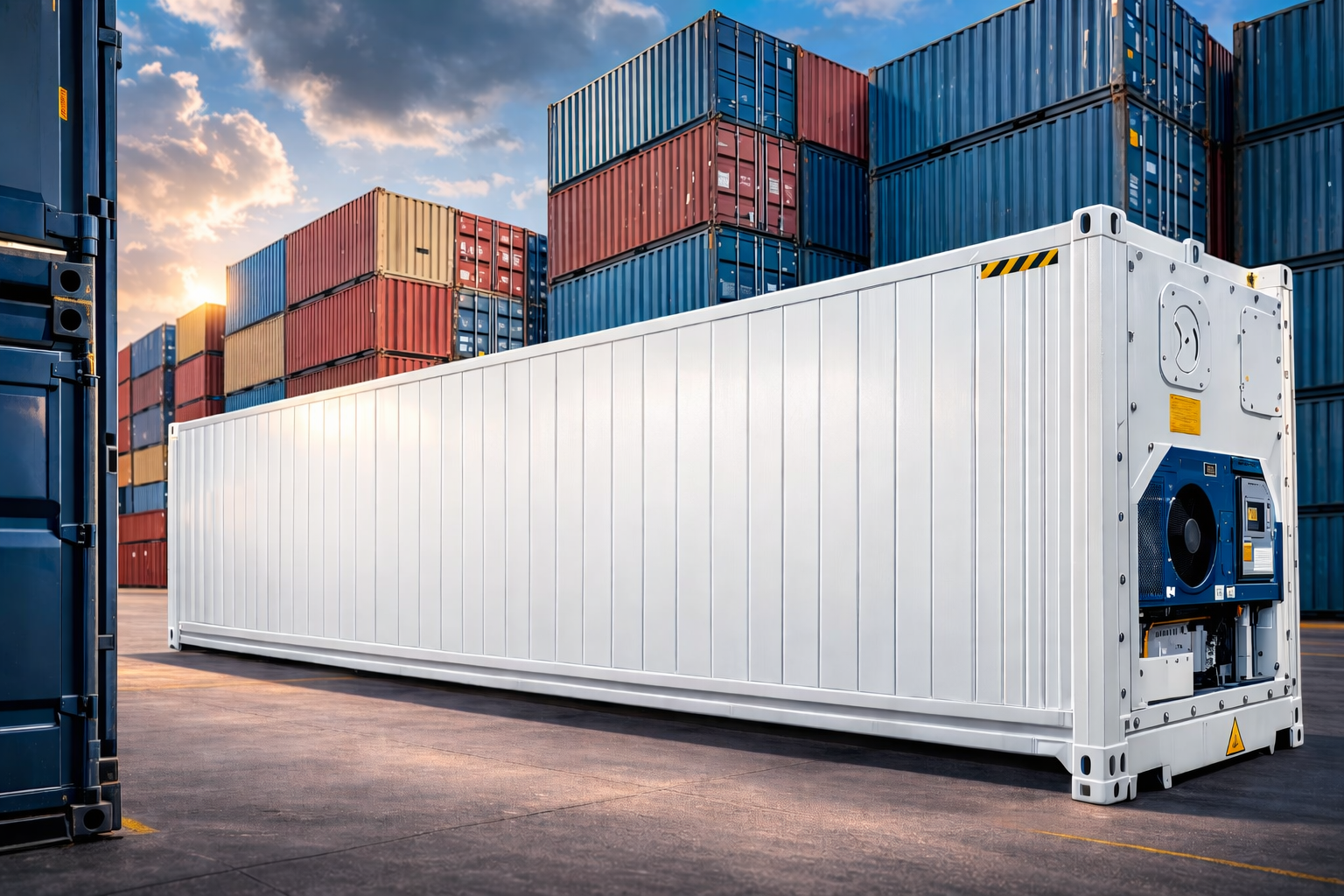
Shipping a reefer container internationally involves eight core steps: confirming your cargo's temperature requirements, selecting the correct container type and size, booking with a licensed NVOCC or cold chain freight forwarder, completing a Pre-Trip Inspection (PTI) and pre-cooling the container, loading pre-chilled or pre-frozen cargo with correct airflow clearance, preparing all required export documentation including USDA or FDA certificates, monitoring temperature continuously throughout ocean transit, and coordinating destination customs clearance and cold store delivery. IGL's refrigerated cargo service covers every stage of this process, with USMEF and USAPEEC certifications, in-house documentation support, and verified destination agents across 50+ countries.
Shipping temperature-sensitive cargo internationally is one of the most operationally demanding tasks in global logistics. A single deviation from the required temperature range can render an entire container of food, pharmaceutical products, or fresh produce unsaleable. Unlike dry container freight, where a delay is an inconvenience, a cold chain failure during ocean transit can mean total cargo loss, regulatory rejection at destination, and significant commercial liability.
This guide is written for US exporters, food producers, pharmaceutical shippers, and anyone responsible for moving refrigerated cargo across international ocean lanes. It covers every stage of the process from container selection through to final delivery, with specific attention to the compliance requirements that apply to US food and agricultural exports.
What Is a Reefer Container?
A reefer container, short for refrigerated container, is an insulated intermodal shipping container with an integrated mechanical refrigeration unit. The refrigeration system maintains a precise temperature inside the container regardless of external ambient conditions during ocean transit, port storage, and inland transport.
Modern reefer containers are capable of maintaining temperatures ranging from approximately -30°C to +30°C. They are equipped with a data logger that records temperature at regular intervals throughout the shipment. Most modern units also support remote monitoring, allowing shippers and logistics providers to track container temperature in near real time via satellite connection during ocean transit.
A reefer container is designed to maintain a pre-set temperature, not to reduce product temperature. Cargo must arrive at the stuffing point already at the required temperature. Loading warm product into a reefer container and expecting the unit to chill it down during transit is one of the most common and costly errors in reefer shipping.
Reefer containers are used across a wide range of industries. The most common cargo categories handled by IGL's refrigerated cargo service include beef, pork, and lamb for export, US poultry and egg exports, seafood and marine products, fresh fruit and vegetables, dairy products, pharmaceutical and healthcare products, and cut flowers and horticulture.
Reefer Container Types and Sizes
Selecting the right container type is the first physical decision in a reefer shipment. Getting it wrong adds cost, compromises cargo integrity, or results in a booking rejection.
| Container Type | External Dimensions | Internal Volume | Typical Use |
|---|---|---|---|
| 20ft Standard Reefer | 6.1m x 2.4m x 2.6m | ~28 CBM / ~21 MT max | Frozen meat, pharmaceuticals, smaller food export volumes |
| 40ft Standard Reefer | 12.2m x 2.4m x 2.6m | ~60 CBM / ~27 MT max | Large volume frozen or chilled food exports |
| 40ft High-Cube Reefer | 12.2m x 2.4m x 2.9m | ~67 CBM / ~27 MT max | High-volume chilled produce, poultry, dairy; extra vertical clearance |
| Controlled Atmosphere (CA) | 40ft or 45ft variants | Comparable to standard 40ft HC | Fresh fruit and vegetables requiring O2/CO2 management |
| Super Freezer Reefer | 20ft or 40ft variants | Standard internal volumes | Bluefin tuna, certain seafood requiring -50°C to -60°C |
The 40ft high-cube reefer is the most commonly used unit for US food exports by volume. It offers the best per-unit cost economics for large shipments and is widely available across all major US export gateways including Los Angeles/Long Beach, New York/New Jersey, Miami, Houston, and Charleston.
Controlled Atmosphere Containers
Controlled atmosphere (CA) containers go beyond temperature control by actively managing the gas composition inside the container. By reducing oxygen levels and elevating carbon dioxide, CA shipping slows the respiration rate of fresh produce and extends shelf life significantly during long ocean transits. CA is primarily used for fresh apples, pears, avocados, berries, and certain stone fruits. Not all shipping lines offer CA capability on all trade lanes, so early booking and specialist logistics support is essential for CA shipments.
Temperature Settings by Commodity: Reference Guide
The following temperature reference guide covers the most common US export commodities shipped in reefer containers. These are indicative ranges. Actual set points must be confirmed with the buyer, the receiving country's import requirements, and any relevant USDA or FDA specifications.
| Commodity | Recommended Set Point | Notes |
|---|---|---|
| Frozen beef / pork / lamb | -18°C | Maximum core product temperature at loading: -15°C or below |
| Fresh chilled beef | -1.5°C to 0°C | Very tight tolerance; requires accurate PTI and pre-cooling |
| Frozen poultry | -18°C | USAPEEC and USDA export protocols apply |
| Fresh shell eggs | +7°C to +10°C | Avoid freezing; humidity control important |
| Frozen seafood | -18°C to -25°C | Super-frozen bluefin tuna requires -50°C to -60°C |
| Fresh salmon / chilled seafood | 0°C to +2°C | Short shelf life; transit time is critical |
| Fresh apples / pears | -1°C to +1°C | CA shipping preferred for long transits |
| Avocados | +7°C to +13°C | CA recommended; temperature below 7°C causes chilling injury |
| Fresh citrus | +5°C to +10°C | Ventilation important; ethylene sensitive varieties vary |
| Dairy (butter, cheese) | -5°C to +5°C | Dependent on product form; frozen butter at -18°C |
| Pharmaceuticals (cold chain) | +2°C to +8°C | GDP compliance required; validation documentation essential |
| Cut flowers | +2°C to +5°C | Short transit windows; ethylene management critical |
Step-by-Step: How to Ship a Reefer Container Internationally
The following eight-step process covers the full lifecycle of a reefer container shipment from booking through to final delivery. Each step is essential. Skipping or shortcutting any one of them is where cold chain failures begin.
- Step 1: Confirm Your Cargo's Temperature Requirements — Identify the exact temperature range, humidity requirements, and ventilation settings for your specific product. Confirm these specifications with your buyer and with your cold chain logistics provider before booking. Do not assume default settings are appropriate for your commodity.
- Step 2: Select the Correct Container Type and Size — Based on your cargo volume, weight, and temperature requirements, select the appropriate container type: 20ft reefer, 40ft standard reefer, 40ft high-cube reefer, or a controlled atmosphere unit. Work with your logistics provider to match container availability to your required vessel departure date.
- Step 3: Book with a Licensed NVOCC or Cold Chain Specialist — Engage a logistics provider that holds FMC NVOCC licensing and has verifiable cold chain expertise on your specific trade lane. For US food exports, confirm that the provider understands USDA and FDA documentation requirements. IGL holds USMEF certification for meat export logistics and USAPEEC certification for poultry and egg export logistics, which means the compliance framework is embedded in the service rather than treated as an afterthought.
- Step 4: Complete Pre-Trip Inspection and Pre-Cool the Container — Before loading begins, a Pre-Trip Inspection (PTI) must be completed and documented. Pre-cool the container to the required set point temperature for a minimum of two to four hours before the first product is loaded.
- Step 5: Load Cargo Correctly and Set All Parameters — Load only pre-chilled or pre-frozen cargo that is already at the correct temperature. Ensure cargo is loaded to maintain proper airflow through the T-bar floor and along the container walls. Set the correct temperature set point, ventilation rate, and humidity controls before sealing.
- Step 6: Prepare and File All Export Documentation — Complete all required documentation before the vessel cut-off deadline. This includes the bill of lading, commercial invoice, packing list, Electronic Export Information (EEI) via AES, and any USDA or FDA certificates required for your commodity and destination.
- Step 7: Monitor Temperature Throughout Ocean Transit — Use your reefer container's built-in data logger and remote monitoring capability to track temperature at every stage of transit. Receive alerts if a temperature excursion occurs. Act immediately if an alarm is triggered.
- Step 8: Coordinate Destination Clearance and Cold Delivery — Work with your logistics provider to ensure seamless handoff at the destination port. This includes destination customs clearance, phytosanitary or veterinary inspections if required, and transport to a licensed cold storage facility.
Shipping Refrigerated Cargo from the USA?
IGL is USMEF and USAPEEC certified. Get a reefer freight quote tailored to your commodity and trade lane.
Get a Reefer QuoteRequired Documentation for US Reefer Container Exports
Documentation errors are responsible for a substantial share of reefer container delays and rejections at port. Below is the complete documentation checklist for US reefer container exports.
- Commercial Invoice — Must include accurate commodity description, HS code, country of origin, unit price, total value, and buyer/seller details.
- Packing List — Detailed breakdown of cartons, gross and net weights, dimensions, and pallet count.
- Bill of Lading (HBL/MBL) — Issued by your NVOCC or freight forwarder, confirming the carrier's acceptance of the cargo.
- Electronic Export Information (EEI) via AES — Mandatory for US exports valued above $2,500 per Schedule B number. Must be filed before cargo reaches the port.
- Certificate of Origin — Required by most destination countries for customs clearance.
- USDA Export Health Certificate — Required for meat, poultry, dairy, and seafood exports. Issued by USDA FSIS or AMS depending on commodity.
- FDA Prior Notice — Required for food and feed exported from the US to countries that require FDA registration.
- AMS (Automated Manifest System) Filing — Required for all US ocean exports. Must be filed by the NVOCC or carrier before the vessel departs.
- Pre-Trip Inspection Record (PTI) — Documents that the reefer unit was inspected and pre-cooled before loading.
- Temperature Download / Data Logger Report — The container's temperature history throughout transit.
IGL handles AMS filing, EEI submission, USDA certificate coordination, and FDA Prior Notice support in-house as part of its refrigerated cargo service. Shippers do not need to engage separate customs brokers or documentation agents for standard US food export lanes.
USDA and FDA Compliance for US Refrigerated Exports
US food exports face one of the most rigorous compliance frameworks in global trade. The USDA and FDA each regulate specific categories of food exports, and destination countries impose their own import requirements on top of US regulatory requirements.
USDA FSIS: Meat and Poultry Exports
Meat and poultry exports are regulated by the USDA Food Safety and Inspection Service (FSIS). Exporting US beef, pork, lamb, or poultry requires an export application and the issuance of a USDA export health certificate by an accredited FSIS export establishment. IGL is a member of the U.S. Meat Export Federation (USMEF), which means our team works within the same compliance framework as the industry associations that represent US meat producers and processors.
USAPEEC: Poultry and Egg Export Compliance
The USA Poultry and Egg Export Council (USAPEEC) represents the US poultry and egg industries in export markets. IGL's USAPEEC certification reflects our specific experience in managing the compliance, documentation, and handling requirements for frozen and chilled poultry and shell egg exports from the USA.
FDA Compliance for Processed Food and Produce Exports
For processed food products, fresh produce, and seafood, the FDA's regulatory framework applies. This includes FDA registration for food facilities, compliance with the FDA Food Safety Modernization Act (FSMA), and FDA Prior Notice for imports into countries that require it.
IGL's operations team manages USDA health certificate coordination, FDA Prior Notice filing, AMS submission, and destination phytosanitary requirements for all standard cold chain export lanes.
Transit Monitoring and How to Respond to a Temperature Excursion
A temperature excursion is any deviation from the agreed temperature range during transit. For frozen cargo, an excursion above -15°C may indicate partial thawing. For chilled cargo, a temperature above +5°C may trigger shelf life recalculations.
How Modern Reefer Containers Are Monitored
Every reefer container includes a built-in microprocessor controller and electronic data logger. Most major shipping lines now offer remote container monitoring (RCM) capability via satellite. IGL's team monitors live container data throughout transit for clients shipping via IGL's cold chain service, with immediate escalation protocols in the event of any alarm event.
What to Do If a Temperature Excursion Is Detected
- Contact your logistics provider and the vessel operator to request a container inspection at the earliest opportunity.
- Obtain a complete temperature download from the reefer unit's data logger and preserve it for insurance purposes.
- Contact your cargo insurer to notify them of the potential claim event.
- Consult with your buyer regarding the commercial disposition of the cargo.
- Obtain a cargo survey at the destination if the excursion was significant.
The best response to a temperature excursion is preventing one from occurring. Proper PTI documentation, verified pre-cooling, correct cargo loading practices, and proactive monitoring throughout transit eliminate the vast majority of cold chain failures.
Reefer Container Shipping Costs: What Affects Your Rate
Reefer freight rates are always quoted as all-in freight including the reefer surcharge, or as a base ocean freight rate plus a separate reefer premium. Reefer containers command a premium over dry container rates due to the cost of the refrigeration equipment, power supply, specialized handling, and greater liability. On most trade lanes, this premium ranges from $500 to $1,500 USD per container depending on the lane, season, and carrier.
Factors that affect your rate include: trade lane, container size, season and market conditions, cargo type and temperature requirements, transit time, and origin/destination ports. As a licensed NVOCC, IGL negotiates volume-based service contracts directly with major ocean carriers, offering reefer freight rates that reflect committed-volume pricing rather than volatile spot market rates.
IGL Is a Licensed NVOCC and Cold Chain Specialist
USMEF and USAPEEC certified. Direct carrier contracts on all major US reefer export lanes.
Explore Our Cold Chain ServicesHow to Choose a Cold Chain Logistics Partner for International Reefer Shipping
The quality of your cold chain partner is the single most consequential decision in a temperature-sensitive shipment. Key criteria: (1) Verify FMC NVOCC licensing on the FMC's public OTI database. (2) Confirm cold chain certifications for your commodity—USMEF and USAPEEC for US meat, poultry, and egg exporters. (3) Assess trade lane depth and carrier relationships. (4) Evaluate in-house documentation capability—IGL handles all standard US food export documentation in-house. (5) Ask about transit monitoring protocols and escalation processes. (6) Confirm domestic trucking integration—the cold chain begins at the origin facility. IGL's approach is visible in our client relationships; read more about our auditable cold chain documentation and our nationwide trucking and inland transport service including reefer-equipped fleet capability across 48 states.
Frequently Asked Questions: Reefer Container Shipping
What is a reefer container?
A reefer container is an insulated intermodal shipping container with an integrated mechanical refrigeration unit that maintains a precise temperature range during ocean transit, port storage, and inland transport. Modern reefer containers can maintain temperatures from approximately -30°C to +30°C and are equipped with electronic data loggers. They are used to transport meat, poultry, seafood, dairy, fresh produce, pharmaceuticals, and other temperature-sensitive cargo internationally.
What temperature should a reefer container be set at?
The correct temperature setting depends entirely on the commodity. Frozen meat and poultry typically require -18°C. Fresh chilled beef is typically -1.5°C to 0°C. Fresh fruit and vegetables range from 0°C to +13°C depending on the product. Pharmaceuticals requiring cold chain typically use +2°C to +8°C. Your buyer's specifications and the destination country's import requirements should always determine the final set point.
What is a Pre-Trip Inspection (PTI) for a reefer container and why is it required?
A PTI is a mandatory functional check of a reefer container's refrigeration unit before cargo is loaded. It verifies that the compressor, evaporator, condenser, fans, temperature controller, data logger, seals, and alarms are all functioning correctly. The container must also be pre-cooled to the required set point before loading. A PTI record should always be obtained and preserved; it is required for most marine cargo insurance claims.
Can I load warm product into a reefer container and let it cool down during the voyage?
No. A reefer container is designed to maintain a pre-set temperature, not to reduce the temperature of warm product. Loading warm or improperly chilled cargo is one of the most common causes of cold chain failures and cargo loss. All product must arrive at the stuffing location already at or below the required temperature before loading begins.
How much does it cost to ship a reefer container from the USA internationally?
Reefer container freight rates vary based on trade lane, container size, season, and market conditions. Reefer rates typically carry a premium of $500 to $1,500 USD over equivalent dry container rates on the same lane. A 40ft high-cube reefer on a US to Middle East or US to Europe lane can range from approximately $2,500 to $6,000 USD and above depending on market conditions. Contact IGL for a current quote specific to your cargo, origin port, and destination.
What documentation is required to ship refrigerated food from the USA?
Required documents typically include: Bill of Lading, Commercial Invoice, Packing List, Electronic Export Information (EEI) filed through AES, Certificate of Origin, USDA Export Health Certificate (for meat, poultry, and dairy), FDA Prior Notice where applicable, AMS filing by the NVOCC, Pre-Trip Inspection record, and a temperature download from the container data logger. Specific requirements vary by commodity and destination country.
What happens if there is a temperature excursion during transit?
If a temperature excursion is detected, the shipper and logistics provider should immediately request a container inspection at the next available port call, obtain a complete temperature data download from the reefer unit, notify the cargo insurer promptly, and consult with the buyer regarding commercial disposition of the affected cargo. Preserving all documentation from the point of detection is essential for any subsequent insurance claim.
What is controlled atmosphere shipping and when should I use it?
Controlled atmosphere (CA) shipping modifies the oxygen, carbon dioxide, and nitrogen balance inside the container in addition to controlling temperature. It is used primarily for fresh fruits and vegetables to slow respiration rates and extend shelf life during long ocean transits. Common applications include fresh apples, pears, avocados, berries, and stone fruits. CA shipping requires specialized containers and advance booking, and is not available on all trade lanes.
Ready to Ship a Reefer Container?
Get a competitive reefer quote from a USMEF and USAPEEC certified cold chain partner. IGL handles documentation, monitoring, and delivery across 50+ countries.
Get a Reefer Quote →