
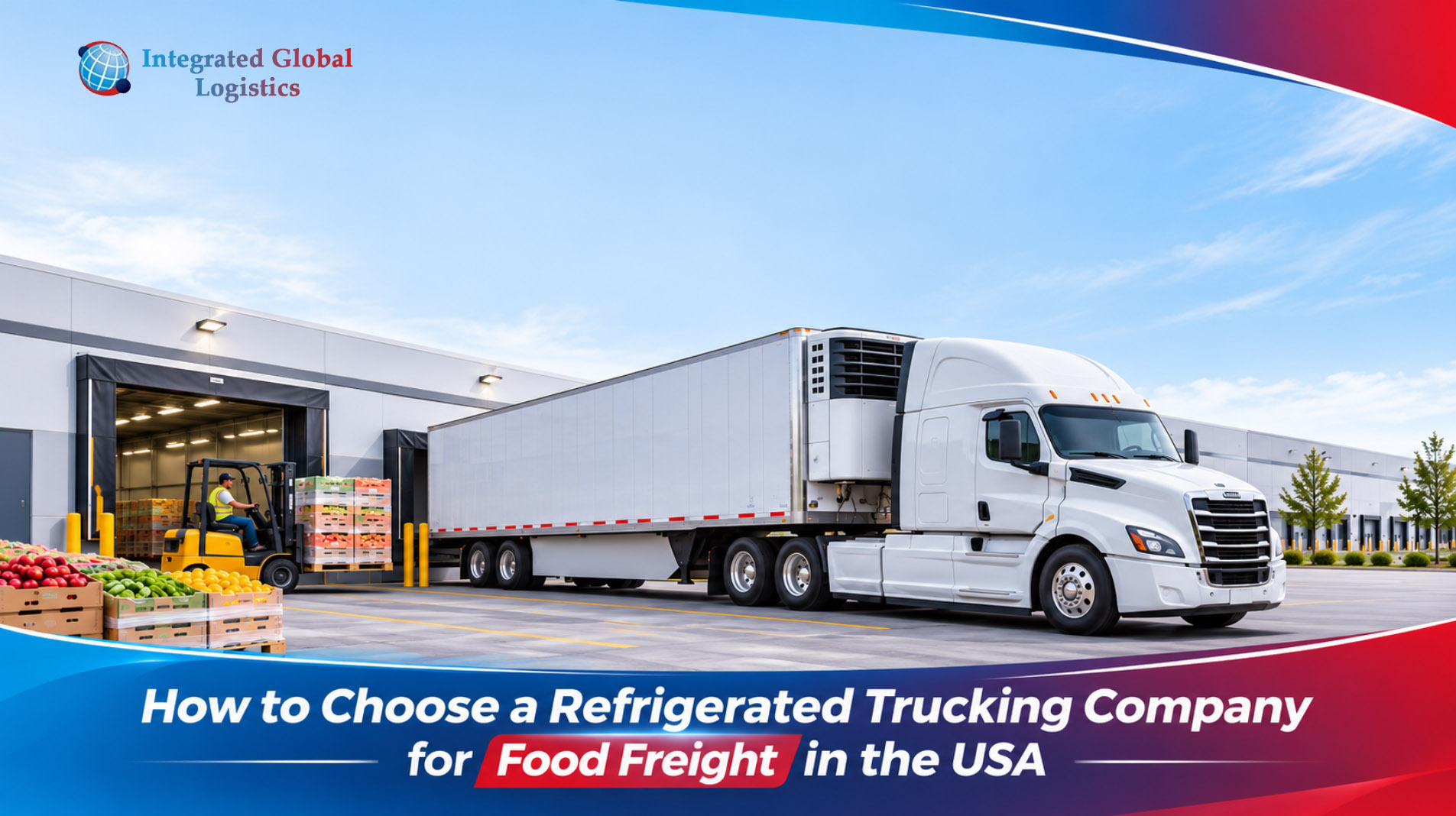
To choose a refrigerated trucking company for food freight in the USA, judge it on five things: reliable, well-maintained reefer equipment, compliance with the FSMA Sanitary Transportation rule, temperature monitoring with proper records, genuine food-grade experience with your type of cargo, and clear service and communication. A carrier that treats sanitary transport and temperature control as a defined, documented process is far more likely to deliver food that arrives safe and saleable than one that simply hauls cold loads.
Food freight is among the least forgiving cargo on the road. It is perishable, often high in value, and regulated for safety, so the margin for error is small. A trailer that runs a few degrees warm, a reefer that fails a pre-cool, or a carrier that cannot show its temperature records can turn a full load into a rejected shipment or a food safety problem. Choosing the right refrigerated trucking company is one of the most important decisions a food shipper makes.
This guide lays out how to evaluate a refrigerated carrier properly: the criteria that matter, the compliance that is non-negotiable, the questions worth asking, and the warning signs to avoid. It is written for food producers, processors, and exporters who need cold chain trucking they can trust, load after load, and who often pair it with reefer truckload shipping and ocean freight in one supply chain.
What a Refrigerated Trucking Company Does
A refrigerated trucking company moves temperature-controlled freight in refrigerated trailers, commonly called reefers. Its job is not simply to haul a load, but to protect the cold chain over the road: confirming the correct set point, pre-cooling the trailer, holding the temperature steady for the whole trip, monitoring it, and keeping the equipment clean and sanitary for food contact.
For food freight, that responsibility carries a food safety dimension that dry trucking never faces. The carrier is effectively guaranteeing a condition, not just a movement, and everything from the trailer to the paperwork exists to hold that condition and prove it was held. Reefer trucking also frequently connects to the ocean leg, so understanding reefer container shipping helps when the same cargo moves from truck to vessel.
The Criteria That Matter Most
Marketing aside, a refrigerated trucking company should be judged on a small set of things that decide whether food arrives safe and saleable. The table below is the checklist to hold any candidate against.
| Criterion | Why it matters |
|---|---|
| Equipment reliability | Well-maintained reefer units and clean trailers prevent breakdowns and contamination on the road. |
| Food safety compliance | Operating in line with the FSMA Sanitary Transportation rule keeps food safe and the shipper covered. |
| Temperature monitoring | Continuous tracking and records prove the cold chain held from pickup to delivery. |
| Food-grade experience | Real experience with your product means the right set points, handling, and lane knowledge. |
| Service and communication | A clear point of contact resolves issues fast when a delivery window or a temperature is at risk. |
Proper licensing and insurance sit underneath all of this as a baseline. A carrier that runs a dedicated reefer operation, rather than handling cold loads occasionally between dry freight, is the profile most likely to protect food cargo consistently.
Food Safety and FSMA Compliance
Food freight is not just about keeping product cold; it is about keeping it safe, and in the United States that is a legal requirement. The FSMA Sanitary Transportation of Human and Animal Food rule sets standards for how food is carried, covering the vehicles and equipment, temperature control, record keeping, and training needed to prevent food from becoming unsafe during transport.
In practice, this means a refrigerated trucking company handling food should keep its trailers clean and suitable for food contact, maintain the temperatures the shipper specifies, keep records that demonstrate it, and train its people in sanitary transport. When you evaluate a carrier, its ability to speak clearly about how it meets these requirements is a strong signal. A partner that builds food safety into its process, the same way a disciplined cold chain protects reefer meat and poultry on export lanes, is the one that protects your product and your compliance standing.
Moving Food Freight That Cannot Fail?
Integrated Global Logistics provides refrigerated truckload for food-grade cargo with temperature monitoring, food-grade experience, and USMEF and USAPEEC membership, coordinated with reefer ocean freight and backed by 99.5% on-time performance. Tell us your product, set point, and lane and our cold chain team will respond within one business day.
Request a Reefer Trucking QuoteQuestions to Ask Before You Commit
A short, direct conversation reveals more than any brochure. Before committing food freight to a refrigerated trucking company, ask these questions and listen for specific, confident answers.
Red Flags to Watch For
Some warning signs tend to predict problems on exactly the loads you cannot afford to lose. Be cautious of a carrier that cannot explain how it meets food safety transport requirements, treats reefer as an occasional service rather than a specialty, is vague about how it manages set points and pre-cooling, cannot provide temperature records, or has no clear way to reach someone when a load is at risk. Any one of these is a reason to ask harder questions, and several together are a reason to look elsewhere. Food freight often moves alongside dry and other cargo, so understanding how a provider handles full truckload shipping overall also tells you how seriously it will treat your reefer loads.
Why Food Shippers Choose IGL
Integrated Global Logistics was built around exactly the criteria above. With a dedicated reefer operation and real food-grade specialization, IGL brings reliable equipment, temperature monitoring, and food safety discipline together under one accountable team, so temperature and compliance are managed as a single process rather than two separate risks. Because IGL also handles the ocean leg, food shippers can keep the cold chain unbroken from the plant to the port to the overseas buyer.
Integrated Global Logistics LLC is an FMC licensed NVOCC and cold chain logistics provider, founded in 2015, specializing in refrigerated cargo for frozen and chilled meat, poultry, seafood, dairy, and produce. IGL provides refrigerated truckload with temperature monitoring, holds USMEF and USAPEEC membership, coordinates reefer trucking with ocean freight, and delivers 99.5% on-time performance with one operations representative from start to finish, across 50+ countries worldwide.
Frequently Asked Questions
What is a refrigerated trucking company?
A refrigerated trucking company moves temperature-controlled freight in refrigerated trailers, known as reefers, that hold a set temperature for perishable goods. It manages the cold chain over the road, including the trailer set point, pre-cooling, temperature monitoring, and the sanitary handling that food freight requires. These carriers move frozen and chilled products such as meat, poultry, seafood, dairy, and produce between facilities, ports, and distribution centers.
How do I choose a refrigerated trucking company for food freight?
Choose a refrigerated trucking company by checking its equipment reliability and well-maintained reefer trailers, its compliance with food safety transportation rules, its temperature monitoring and documentation, its food-grade experience with your type of cargo, and its service and communication. A carrier that treats sanitary transport and temperature control as a defined process, rather than an afterthought, is far more likely to deliver food freight that arrives safe and saleable.
What food safety rules apply to refrigerated trucking?
In the United States, the transport of food is governed by the FSMA Sanitary Transportation of Human and Animal Food rule, which sets requirements for vehicles and equipment, temperature control, record keeping, and training to prevent food from becoming unsafe during transport. A refrigerated trucking company handling food freight should operate in line with these requirements, keeping equipment sanitary and holding the correct temperature throughout the trip.
Why does temperature monitoring matter in refrigerated trucking?
Temperature monitoring proves the cold chain held from pickup to delivery. A reefer trailer records the set point and the air temperature, and modern units can send readings and alerts so a deviation is caught during the trip rather than discovered on arrival. For food freight, this record supports food safety compliance, gives the receiver confidence the product is sound, and backs up any claim if something goes wrong.
What temperature do refrigerated trucks maintain for food?
A refrigerated truck holds whatever set point the product requires, programmed before loading. Frozen food is typically carried at around -18 degrees Celsius, which is 0 degrees Fahrenheit, or colder, while chilled and fresh products are held just above freezing, often between about 0 and 4 degrees Celsius depending on the commodity. The correct set point depends on the food and the shipper's specification and is confirmed for each load.
What is the difference between a refrigerated trucking company and a broker?
A refrigerated trucking company operates trailers and moves the freight, while a broker arranges transport by matching the load to a carrier. Both can be useful, but for food freight it matters that whoever handles the shipment ensures the equipment, temperature control, and food safety standards are met. A logistics partner that coordinates reefer trucking with the rest of your supply chain, under clear accountability, reduces the risk of a cold chain failure.
What questions should I ask a refrigerated carrier?
Ask how the carrier maintains and inspects its reefer equipment, how it manages set points and pre-cooling, how it monitors temperature during the trip, how it meets food safety transportation requirements, and who your point of contact is if something goes wrong. Clear, specific answers signal a carrier that treats the cold chain as a managed process rather than a routine haul.
Does IGL provide refrigerated trucking for food freight?
Yes. Integrated Global Logistics provides refrigerated truckload service for food-grade cargo as part of its cold chain logistics, coordinated with reefer ocean freight for exporters. IGL brings temperature monitoring, food-grade experience, and USMEF and USAPEEC membership, with 99.5% on-time performance, moving frozen and chilled food freight across the USA and to 50+ countries.
IGL Freight Intelligence
IGL's Freight Intelligence content is produced by IGL's operations teams. (732) 250-9000 | info@integratedgl.com