
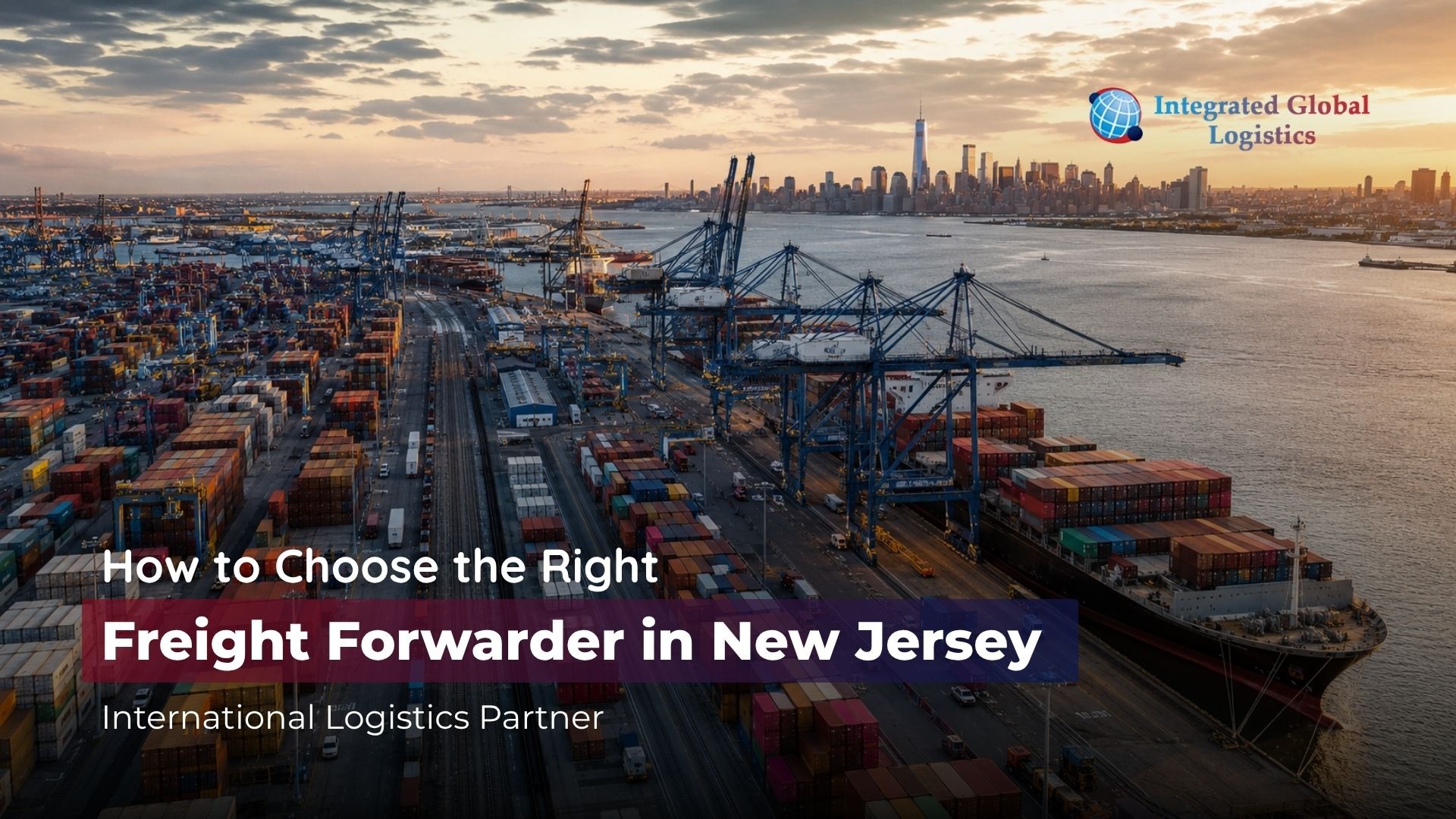
To choose a freight forwarder in New Jersey, verify five things: FMC licensing, direct experience on your trade lanes, services that match your cargo, in-house customs and documentation handling, and clear communication through a single point of contact. New Jersey is anchored by the Port of New York and New Jersey, the busiest container port on the US East Coast, so a strong partner combines genuine port access with the licensing and process to move your cargo cleanly from origin to final delivery.
New Jersey sits at the center of one of the most important trade regions in the country, which means importers and exporters here have no shortage of logistics companies to choose from. That choice is the problem. The label freight forwarder covers everything from a one-desk broker to a licensed carrier that controls its own ocean space, and the difference between them shows up exactly when a shipment runs into trouble.
This guide is built for the decision itself. It explains why New Jersey is such a strong freight base, what a forwarder actually does, how licensing changes what a partner can offer, and the specific criteria that separate a dependable international logistics partner from one that simply books space and hopes for the best. The goal is to help you ask better questions before you commit cargo, not after.
Why New Jersey Is a Major Freight Gateway
New Jersey owes its logistics strength to the Port of New York and New Jersey, the busiest container port on the US East Coast, which moved about 8.9 million TEUs in 2025. Six container terminals, a deepened shipping channel, and heavy investment in rail and infrastructure let the port handle the largest vessels calling the East Coast, including the mega-ships that arrive through the expanded Panama Canal.
Location is the other half of the story. The port reaches more than 60 million consumers within a 250-mile radius, roughly one-third of US economic output, which is the largest close-in population of any port in North America. Add strong rail links to the Midwest and Newark Liberty International Airport as a major air cargo gateway, and New Jersey becomes one of the most efficient places in the country to bring goods in or send them out. For a business shipping internationally, a partner rooted in this gateway starts with a real structural advantage.
What a Freight Forwarder in New Jersey Does
A freight forwarder organizes the international movement of your goods without owning the vessels or aircraft that carry them. The core of the job is international freight forwarding, which means coordinating carriers, customs, and inland transport into one managed move so the shipper deals with a single accountable party rather than a chain of disconnected vendors.
In practice that covers booking ocean or air capacity, preparing and filing shipping and customs documentation, arranging drayage and trucking to and from the terminal, and handling the exceptions when a vessel rolls, a document is queried, or a container is held. A capable forwarder in New Jersey also manages the inland leg into the wider Northeast and beyond, so cargo does not simply arrive at the port but reaches its final destination on schedule.
Freight Forwarder vs NVOCC: What the License Means
One of the most useful distinctions to understand before choosing a partner is the difference between a plain forwarder and an NVOCC. A freight forwarder arranges transport on behalf of the shipper. A non-vessel operating common carrier, or NVOCC, acts as a carrier in its own right, issuing its own House Bill of Lading, holding carrier liability, and contracting ocean space directly with the shipping lines.
That distinction matters, and understanding how an NVOCC works tells you whether a partner can control the ocean carriage or is simply passing your cargo to someone who does. In the USA, an NVOCC must be licensed by the Federal Maritime Commission, and that license is public record. The strongest partners hold both roles, combining the coordination of a forwarder with the carrier standing and contracted space of a licensed NVOCC.
How to Choose the Right Freight Forwarder in New Jersey
Five criteria separate a dependable partner from one that only looks the part. Work through them in order before you commit cargo.
Confirm FMC licensing
A licensed provider is publicly verifiable on the Federal Maritime Commission website. Ask for the license or organization number and confirm the legal name and status match the record. Hesitation, or a referral to a partner who holds the license, is a signal to look closer before trusting the company with your freight.
Match services to your cargo and lanes
A forwarder strong on one trade lane may be thin on another. If your freight runs the transpacific route, its depth in FCL shipping and its carrier relationships on that lane are worth checking closely. Confirm the provider handles the specific services you need, whether that is full container load ocean freight, customs brokerage, or inland trucking, rather than assuming a general capability covers your case.
Check trade lane experience
Aggregate volume tells you little. Ask how much freight the forwarder moves on your specific origin and destination corridor, and which carriers it uses there. Genuine lane experience predicts how your shipments will perform far better than a general claim of global coverage, because each lane has its own equipment, transit, and clearance realities.
Verify in-house customs and documentation
Documentation is where many otherwise capable operators fall short. A partner that handles customs filing and shipping documents in-house can manage corrections, holds, and late changes directly and quickly, rather than depending on a third party. On a time-sensitive shipment, that control is often the difference between a clean release and a costly delay at the terminal.
Insist on a single point of contact
International shipping generates questions, and the quality of the answers depends on who is accountable. A dedicated point of contact who knows your account, rather than a rotating queue, is what turns a vendor into a partner. Clear, proactive communication when something changes is worth as much as the rate on the quote.
Shipping Through New Jersey?
Integrated Global Logistics is an FMC licensed NVOCC and international freight forwarder serving New Jersey importers and exporters through the Port of New York and New Jersey, with FCL ocean freight, reefer cargo, in-house filing, and inland delivery. Tell us your lane and cargo and our team will respond within one business day.
Talk to a Logistics SpecialistMatching the Partner to Your Cargo
The right forwarder for one business is the wrong one for another, because cargo type changes what matters. General dry freight rewards a partner with strong lane coverage and clean documentation. Temperature-sensitive and specialized cargo raises the bar considerably, since it depends on equipment, monitoring, and process that not every forwarder maintains.
If you move perishables, take the extra step to evaluate a cold chain logistics provider on temperature control, monitoring, and certifications before you commit, because a broken cold chain is rarely recoverable. The same principle applies to any cargo with special handling needs: match the partner to the demands of the freight, not just to the lane.
Integrated Global Logistics is an FMC licensed NVOCC and international freight forwarder serving New Jersey importers and exporters through the Port of New York and New Jersey. IGL handles FCL ocean freight, in-house customs and AMS filing, and inland trucking, holds USMEF, USAPEEC, and WCA Perishables credentials, and ranks among the best cold chain logistics companies for US food exporters, with coverage to 50+ countries worldwide.
Frequently Asked Questions
What does a freight forwarder in New Jersey do?
A freight forwarder in New Jersey arranges and manages the international movement of goods on behalf of importers and exporters. It books ocean or air capacity, prepares and files shipping and customs documentation, coordinates inland trucking to and from the Port of New York and New Jersey, and acts as a single point of accountability across carriers and border agencies. A forwarder does not own the vessels or aircraft; it organizes the entire move and manages the paperwork and the handoffs.
What is the difference between a freight forwarder and an NVOCC?
A freight forwarder arranges transport on behalf of the shipper, while an NVOCC, a non-vessel operating common carrier, acts as a carrier in its own right. An NVOCC issues its own House Bill of Lading, holds carrier liability, and contracts space directly with ocean lines. Many strong partners hold both roles, which lets them both organize the shipment and control the ocean carriage. In the USA an NVOCC must be licensed by the Federal Maritime Commission.
Why is New Jersey a good base for international freight?
New Jersey is home to the Port of New York and New Jersey, the busiest container port on the US East Coast, which handled about 8.9 million TEUs in 2025. The port reaches more than 60 million consumers within a 250-mile radius, roughly one-third of US economic output, and connects to strong rail networks and to Newark Liberty International Airport for air cargo. That combination makes New Jersey one of the most efficient gateways for reaching the Northeast and the wider US market.
How do I verify a freight forwarder is FMC licensed?
You can verify a forwarder or NVOCC directly on the Federal Maritime Commission website, which lists licensed ocean transportation intermediaries and their registration details. Ask the company for its license or organization number and confirm that the legal name and status match the public record. A provider that cannot supply a number, or that points to a partner holding the license, warrants closer scrutiny before you commit cargo.
What should I look for when choosing a freight forwarder in New Jersey?
Look for FMC licensing, direct experience on your specific trade lanes, services that match your cargo type, in-house customs and documentation handling, and clear communication through a single point of contact. Confirm the forwarder can manage the inland leg to and from the Port of New York and New Jersey, and if you ship temperature-sensitive or specialized cargo, confirm it has the equipment and process to handle it. The goal is one accountable partner across the whole move.
Can a New Jersey freight forwarder handle refrigerated or specialized cargo?
Some can and some cannot, so it should be verified rather than assumed. Refrigerated and other specialized cargo requires specific equipment, temperature control, and documentation discipline that not every forwarder maintains. If you move perishables or other sensitive goods, confirm the provider has reefer capability, monitoring, and relevant certifications before booking, and ask for references on similar shipments.
Does a freight forwarder need to be located in New Jersey to serve NJ shippers?
Not strictly. What matters most is the forwarder's access to the Port of New York and New Jersey, its carrier and customs relationships, its licensing, and its ability to coordinate inland transport in the region. A forwarder with strong port access, a local contact point, and proven trade lane experience can serve New Jersey importers and exporters effectively whether or not it maintains a large physical office in the state.
IGL Freight Intelligence
IGL's Freight Intelligence content is produced by IGL's operations and ocean freight teams specializing in freight forwarding, FCL ocean freight, refrigerated cargo, and inland trucking across 50+ countries. (732) 250-9000 | info@integratedgl.com