
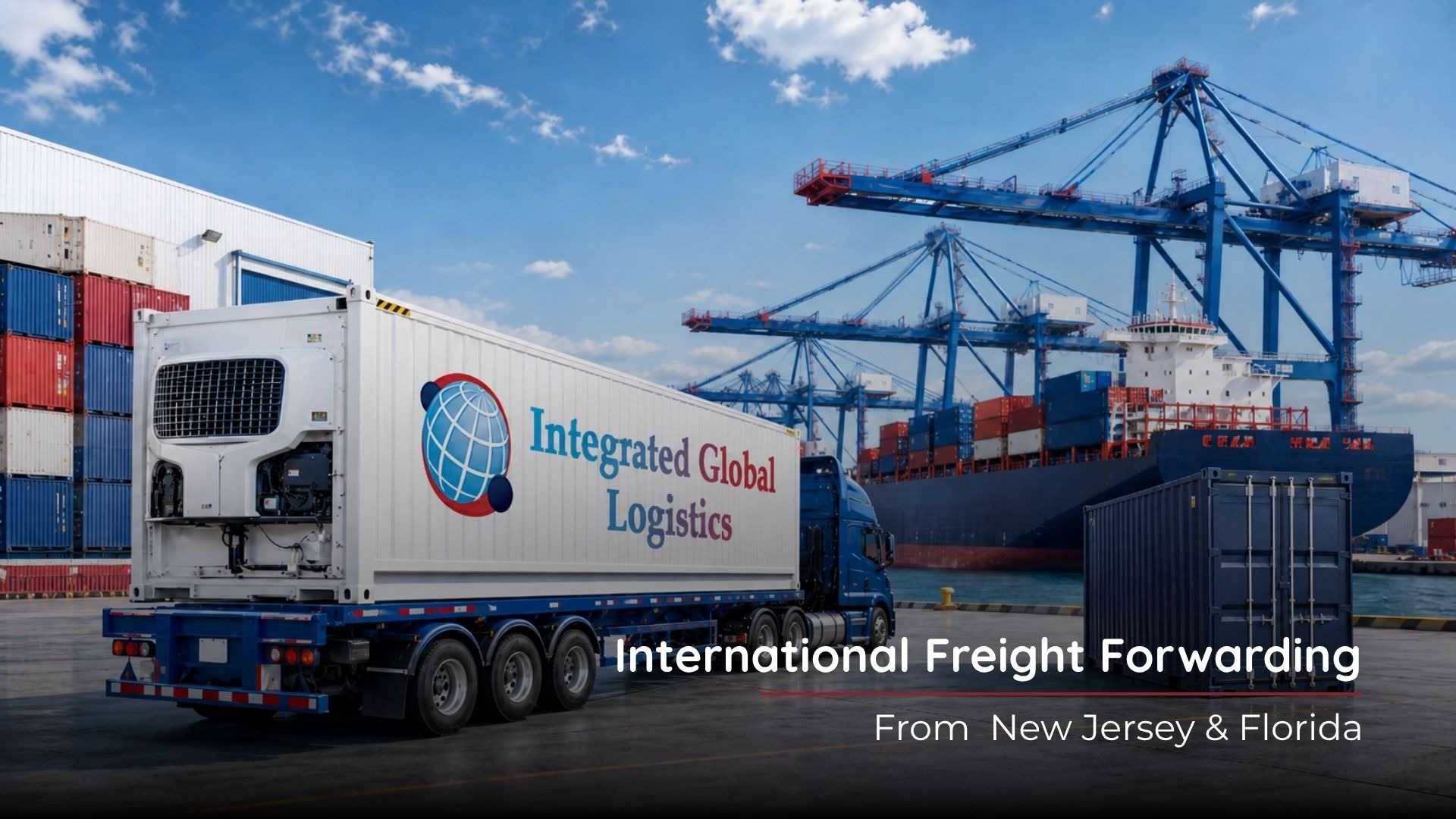
International freight forwarding from the US East Coast is rarely difficult because of a single decision. Most delays, cost leaks, and service issues happen when the shipment moves from one stage to the next without enough control. A container gets booked before the origin planning is ready. A truck arrives too tightly to cut off. A reefer move is arranged, but the domestic leg and the port handoff are not aligned. Documentation is technically started, but not structured early enough to protect the sailing.
That is why East Coast shippers do not just need a freight provider. They need a forwarding partner that can connect inland movement, container planning, export timing, and cargo control into one disciplined workflow.
For companies shipping from New Jersey and Florida, that need becomes even more obvious. Both states are important origin points, but they create different operating realities. New Jersey often means dense port activity, stricter timing discipline, and less room for avoidable mistakes. Florida often brings more temperature-sensitive cargo, food-related exports, and tighter cold chain expectations from pickup through departure.
Integrated Global Logistics serves that need by focusing on the parts of freight execution that commercial shippers actually feel: containerized ocean freight, refrigerated cargo coordination, inland trucking support, documentation discipline, and real-time shipment visibility.
Why New Jersey and Florida matter for East Coast freight
New Jersey and Florida both sit inside active international shipping corridors, but they do not create the same planning priorities.
| Origin state | What usually matters most | Why it affects forwarding strategy |
|---|---|---|
| New Jersey | Terminal timing, truck scheduling, documentation accuracy, container coordination | Dense port activity leaves less margin for late pickup, incomplete paperwork, or disconnected handoffs |
| Florida | Temperature control, reefer planning, inland to port continuity, cargo condition | Many shipments require tighter cold chain discipline from domestic pickup through ocean loading |
What East Coast shippers usually get wrong
Many shipping problems start with a perfectly reasonable question: What is the rate? Rates matter, but a rate is only the commercial starting point. It does not guarantee loading quality, cutoff protection, documentation integrity, or controlled truck-to-ocean handoffs.
This is why experienced shippers judge a freight forwarder by execution, not just by access to capacity.
How Integrated Global Logistics serves East Coast shippers
1. Ocean freight planning starts before the booking
For containerized cargo, the shipment should begin with shipment fit: right equipment, realistic readiness timing, inland support, and cutoff buffer. That discipline is the same logic covered in this step-by-step guide to shipping FCL from the USA.
2. NVOCC structure creates clearer accountability
A licensed NVOCC model gives East Coast exporters clearer control across shipment flow and documentation responsibility. For a plain-language breakdown, see what an NVOCC means for US shippers.
3. Inland trucking has to support the ocean move, not sit outside it
In New Jersey, truck timing and terminal coordination can determine whether cargo sails. In Florida, inland continuity can be even more critical for reefer moves. International forwarding is only stable when trucking and ocean execution are managed as one connected plan.
4. Reefer cargo needs one continuous chain, not two separate moves
Reefer control starts before the container reaches the vessel: pre-cooling, set-point confirmation, cargo readiness, appointment timing, and clean handoff. This is why reefer truckload discipline at pickup is central to export reliability.
5. Cold chain credibility is built through execution discipline
The best cold chain partners are judged by operational control, not broad claims. That same principle appears in how shippers compare cold chain logistics companies serving US food exports.
What this looks like in New Jersey
A New Jersey shipper usually needs precision more than persuasion. In busy port environments, delayed decisions create immediate consequences. Truck dispatch, documentation readiness, and container planning all have to align before the vessel leg begins.
What this looks like in Florida
A Florida shipper often needs continuity as much as speed, especially when shipping food, chilled products, frozen goods, or other temperature-sensitive cargo. The process must protect condition before port arrival, not only after vessel loading.
What shippers should look for in an East Coast freight partner
- Can the provider support containerized ocean freight with structured planning instead of reactive booking?
- Can the inland leg be coordinated in a way that protects the port move?
- If cargo is temperature-sensitive, can the team manage reefer continuity from pickup through export?
- Is the shipment handled under a licensed NVOCC structure with clear accountability?
- Will your team get real milestone visibility, or still need to chase updates manually?
Final takeaway
International freight forwarding from New Jersey and Florida is defined by shipment control at origin, clear responsibility structure, and smooth coordination between trucking, documentation, and ocean execution. For recurring container freight or time-sensitive reefer cargo, that control is what creates repeatable shipping performance.
FAQs
Why is international freight forwarding from New Jersey different from Florida?
New Jersey freight usually puts more pressure on terminal timing, truck coordination, and documentation precision in a dense port environment. Florida freight often adds more temperature control and cold chain planning, especially for food and reefer cargo. Both need strong execution, but not always in the same way.
Does Integrated Global Logistics only handle refrigerated cargo?
No. The company supports containerized ocean freight, inland trucking coordination, and refrigerated cargo. Refrigerated shipping is a major strength, but the broader service model is designed for commercial shippers moving recurring freight.
Why does licensed NVOCC status matter for East Coast shippers?
Licensed NVOCC status matters because it creates clearer operational accountability in ocean freight. That structure is especially valuable for shippers who want more control over documentation, shipment flow, and execution responsibility.
When does a shipper need reefer coordination instead of standard container planning?
A shipper needs reefer coordination when the product condition depends on temperature control from pickup through export. That includes many types of food, perishables, frozen cargo, and other temperature-sensitive shipments.
Why is inland trucking such a major part of international freight forwarding?
Because the shipment usually breaks at the handoff points before the ocean leg, not only during transit. When inland pickup, port delivery, and cargo readiness are not aligned, the entire export move becomes less reliable.
Is this approach better suited for one off shipments or recurring commercial freight?
It matters for both, but it becomes more valuable for recurring freight. Repeat shipping programs expose weak coordination quickly, so structured execution and clear visibility become far more important over time.