
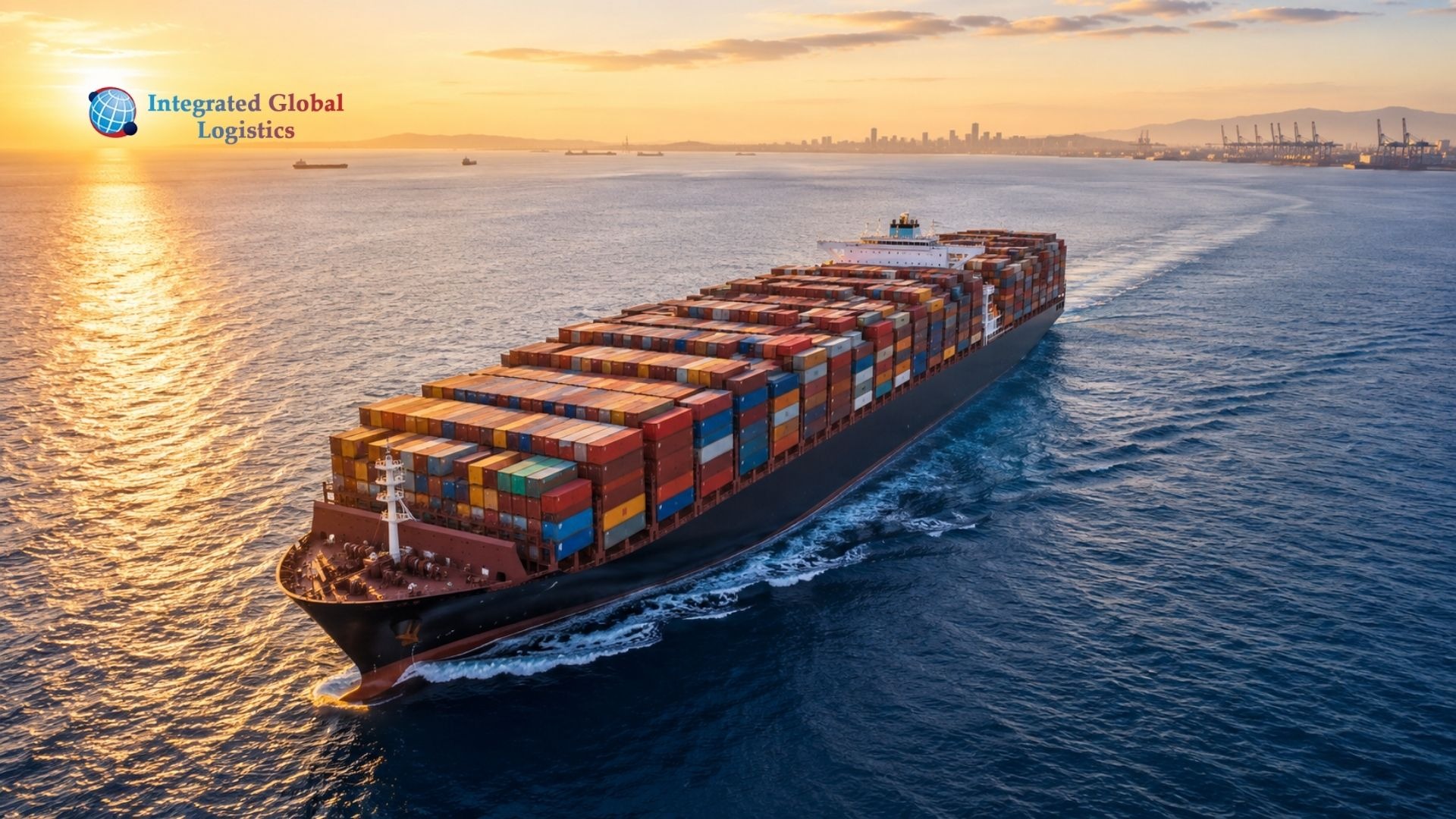
FCL shipping from Asia to the USA moves a full container across the transpacific lane, the busiest ocean trade route in the world. Port-to-port transit runs about 14 to 20 days to the US West Coast and 28 to 40 days to the East Coast via the Panama Canal. Rates are set per container and shift with capacity, fuel, season, and routing rather than a fixed price list. In 2026 the lane is served by three carrier alliances, Ocean Alliance, Gemini Cooperation, and Premier Alliance, alongside a large independent network from MSC.
The Asia to USA trade lane is the single most important corridor in global containerized trade, and for most US importers it is also the most consequential logistics decision they make. Getting full container load shipping right on this lane affects landed cost, inventory timing, and the reliability of every downstream commitment to customers. Getting it wrong shows up as missed sales windows, demurrage, and capital tied up in cargo that is not where it should be.
This guide brings together the three things importers ask about most often: how long the crossing actually takes from each major Asian origin, what determines the rate you are quoted, and who is moving the cargo after the 2025 restructuring of the carrier alliances. The aim is to give you a working understanding of the transpacific lane that holds up whether you ship one container a quarter or several hundred a year.
Why the Transpacific Lane Matters in 2026
Two forces are reshaping how cargo moves from Asia to the USA this year, and both change how importers should plan. The first is the maturing of the alliance restructuring that began in early 2025. The second is the continued shift of manufacturing beyond China into Vietnam, Thailand, India, and other Southeast Asian origins, which spreads volume across more ports and more service strings.
The alliance map has been redrawn
The 2M agreement between Maersk and MSC ended, and Hapag-Lloyd left its former grouping to partner with Maersk. The result is a new structure of three alliances plus a large standalone MSC network. For importers this matters because the network blueprint a carrier follows, such as direct port calls versus hub-and-spoke relays, now affects schedule reliability as much as the rate on the bill of lading.
Sourcing is spreading across Asia
As production diversifies under the China plus one approach, more US importers are booking from Vietnam, Thailand, and India in addition to the established Chinese gateways. Carriers have responded by adding calls in Southeast Asia, but transit times and equipment availability from these newer origins differ from the mature China lanes, which makes origin-by-origin planning more important than it used to be.
What FCL Shipping from Asia to the USA Involves
FCL stands for full container load, where your cargo occupies an entire container rather than sharing space with other shippers. On the transpacific lane the standard units are the 20ft, 40ft, and 40ft high-cube container, with the 40ft high-cube being the most common for general US imports because it offers the best volume for the rate.
FCL is priced per container, not per cubic meter, which is what makes it efficient once a shipment fills roughly half a container or more. It also reduces handling, because the box is sealed at origin and not opened until it reaches the consignee, which lowers the risk of damage and the delays that come from shared consolidation. Importers handling their first transpacific container often benefit from understanding how to ship FCL end to end before committing to a booking.
If a shipment fills about half a container or more, FCL is almost always the better value because the rate does not change with how full the box is. Below that, LCL can make sense, though shared consolidation adds handling and can extend transit. Volume, commodity value, and how time-sensitive the cargo is decide where the line falls.
Transit Times from Asia to the USA
Transit time depends on the origin port, the destination coast, and the service string. The figures below are typical port-to-port ocean estimates for 2026. They do not include origin pickup, export clearance, US customs release, or inland delivery, all of which extend the door-to-door timeline.
| Origin Port | US Destination | Coast | Port-to-Port |
|---|---|---|---|
| Shanghai | Los Angeles / Long Beach | West | 14 to 20 days |
| Ningbo | Los Angeles / Long Beach | West | 14 to 18 days |
| Shenzhen / Yantian | Los Angeles / Long Beach | West | 15 to 18 days |
| Qingdao | Los Angeles / Long Beach | West | 14 to 18 days |
| Busan, South Korea | Los Angeles / Long Beach | West | 11 to 14 days |
| Ho Chi Minh City | Los Angeles / Long Beach | West | 18 to 22 days |
| Shanghai | New York / New Jersey | East (via Panama) | 28 to 35 days |
| Shenzhen | Savannah | East (via Panama) | 30 to 40 days |
| Shanghai | Houston | Gulf | 35 to 45 days |
West Coast, East Coast, or land bridge
West Coast ports are the fastest entry point from Asia and usually the lowest ocean cost. East Coast and Gulf routings via the Panama Canal take longer but can reduce inland transport when the final destination sits in the eastern half of the country. A land bridge, where the box lands on the West Coast and crosses the country by rail, is the common middle path for cargo that needs to reach the Midwest or East faster than the all-water route allows.
Schedule reliability also varies by carrier network. In early 2026 the hub-and-spoke model run by the Gemini Cooperation reported the tightest arrival performance on the transpacific lane, while other networks averaged longer delays, so the published transit time is only useful alongside a carrier's actual on-time record.
What Drives FCL Rates on the Transpacific Lane
Transpacific FCL pricing is not a fixed list. A rate is quoted per container for a specific service and is valid for a limited window, because the underlying market moves constantly. Understanding the components helps you read a quote and judge whether it is competitive, and it is the foundation for tracking FCL ocean freight rates as they move through the year.
Capacity versus demand
The base ocean rate rises and falls with how much vessel space is available against how much cargo wants to move. When carriers add capacity through newbuild deliveries the market softens, and when they manage capacity through blank sailings or demand surges ahead of peak season, rates climb. This single factor drives most of the volatility importers experience.
Fuel and the bunker adjustment factor
Bunker fuel is one of the largest costs a carrier carries, and it is passed through as a bunker adjustment factor that moves with fuel prices. When fuel rises, this surcharge rises with it, independent of the base rate.
Seasonal surcharges and rate increases
Peak season surcharges appear during the high-demand months ahead of major US retail seasons, and general rate increases are announced periodically across the lane. Both are normal features of transpacific pricing rather than one-off events, and both are easier to absorb when volume is committed in advance.
Destination coast and equipment
East Coast and Gulf routings generally carry a premium over the West Coast because of the longer voyage. Equipment availability at the origin also matters, since a shortage of the right container type at a specific port pushes rates up and can delay booking confirmation.
Importing a Full Container from Asia?
Integrated Global Logistics is an FMC licensed NVOCC moving FCL ocean freight across the transpacific lane with multi-carrier options, in-house filing, and inland delivery across the USA. Tell us your origin port, destination, and commodity and our team will respond within one business day.
Get a Transpacific FCL QuoteCarrier and Alliance Options in 2026
After the 2025 reshuffle, the transpacific lane is run by three alliances and one large independent. Each follows a different operating logic, and that logic, not just the rate, should guide which service fits your cargo. A good international freight forwarding partner gives you access across all of them rather than a single carrier's schedule.
CMA CGM, COSCO, Evergreen, and OOCL. The largest alliance by scale, with the broadest blanket coverage and the most port-pair options across Asia to North America. Extended through 2032, it is the default for importers who want frequency and reach.
Maersk and Hapag-Lloyd. Built around a hub-and-spoke model that prioritizes schedule reliability, and the early-2026 leader on transpacific on-time performance. A strong fit for time-sensitive or high-value cargo where predictability is worth more than the lowest rate.
ONE, HMM, and Yang Ming. The regrouped former partners of THE Alliance, competitive on transpacific volume and intra-Asia connections, with capacity advantages on Asia to North America that suit importers focused on cost and volume.
The largest carrier by fleet, now operating a standalone east-west network with broad direct coverage and routing flexibility. Useful when you want optionality outside the alliance structures.
Because each network behaves differently on reliability, coverage, and cost, comparing across carriers is where a forwarder adds value. Working through licensed ocean freight services gives importers contracted access and multi-carrier comparison rather than dependence on a single schedule.
Contract Rates vs Spot Rates
Two pricing models run side by side on the transpacific lane, and the right choice depends on your volume and your tolerance for swings.
| Factor | Contract Rate | Spot Rate |
|---|---|---|
| Best for | Steady, predictable volume | Variable or one-off shipments |
| Pricing | Fixed over a set period | Moves with the live market |
| Space priority | Committed allocation | Subject to availability |
| Peak season exposure | Insulated | Fully exposed |
Many importers run a blended approach, committing baseline volume on contract for budget certainty and equipment priority, then covering seasonal spikes or overflow on spot. The balance shifts with the market: in soft conditions spot can undercut contract, while in tight peak periods a contract is what keeps cargo moving.
How to Control Cost and Transit Risk
Beyond the rate itself, several practical choices decide how much an Asia to USA program actually costs and how reliably it runs.
Book ahead of peak
Space tightens and surcharges rise in the months before major US retail seasons. Committing volume early protects both rate and equipment access when the market is most stressed.
Match the coast to the destination
A lower West Coast ocean rate can be erased by long inland haulage to an East Coast destination. Compare the full landed picture, including the onward move, rather than the ocean leg alone. For cargo that needs temperature control on the inland leg, coordinated reefer truckload shipping keeps the chain intact after discharge.
Plan the inland leg with the ocean booking
Container delivery from the port is where avoidable cost and delay often appear. Arranging drayage and onward transport alongside the ocean booking, including full truckload shipping where volume justifies it, prevents the gaps that lead to demurrage and detention. When deciding how to move cargo onward, the choice between FTL vs LTL shipping comes down to volume, speed, and how many stops the freight can tolerate.
Integrated Global Logistics is an FMC licensed NVOCC and international freight forwarder handling FCL ocean freight across the transpacific lane, customs and AMS filing, and inland delivery throughout the USA. As a freight forwarder in New Jersey with multi-carrier access and coverage to 50+ countries, IGL gives importers a single point of control from origin booking to final delivery.
Frequently Asked Questions
How long does FCL shipping from Asia to the USA take in 2026?
Port-to-port ocean transit from major Asian ports to the US West Coast typically runs 14 to 20 days, with Shanghai to Los Angeles or Long Beach averaging about 15 to 18 days. US East Coast routings via the Panama Canal usually take 28 to 40 days, and US Gulf ports such as Houston run a few days longer still. Door-to-door times are longer once origin handling, customs clearance, and inland delivery are added.
What is the difference between West Coast and East Coast routing from Asia?
West Coast routings to Los Angeles, Long Beach, Oakland, Seattle, and Tacoma are the fastest path from Asia and generally carry lower ocean rates. East Coast routings to New York, New Jersey, Savannah, and Norfolk take longer because they sail through the Panama Canal, but they can save inland transport cost and time when the final destination is in the eastern half of the country. A land bridge, where cargo lands on the West Coast and moves east by rail, is a common middle option for time-sensitive freight.
What determines FCL shipping rates from Asia to the USA?
Transpacific FCL rates are shaped by the balance of vessel capacity and demand, bunker fuel prices reflected in the bunker adjustment factor, seasonal peak surcharges and general rate increases, equipment availability at origin, destination port and coast, and whether the cargo moves under a contract or a spot booking. Alliance network changes and routing disruptions also move rates, which is why quotes are valid for limited windows and should be confirmed close to the booking date.
Which carriers and alliances serve the Asia to USA trade lane in 2026?
The transpacific lane in 2026 is served mainly by three alliances and one large independent. The Ocean Alliance groups CMA CGM, COSCO, Evergreen, and OOCL and offers the broadest coverage. The Gemini Cooperation pairs Maersk and Hapag-Lloyd around a hub-and-spoke model and has led on schedule reliability in early 2026. The Premier Alliance brings together ONE, HMM, and Yang Ming and remains competitive on transpacific volume. MSC operates a large standalone network with broad direct coverage.
Is FCL or LCL better for shipping from Asia to the USA?
FCL, or full container load, is usually the better choice once a shipment fills roughly half a container or more, because it is priced per container rather than per cubic meter, reduces handling, and lowers the risk of damage and delay from shared consolidation. LCL, or less than container load, suits smaller shipments where paying for a full container is not justified. The crossover point depends on volume, commodity value, and how time-sensitive the cargo is.
Should I use a contract rate or a spot rate for transpacific FCL?
A contract rate locks pricing and space commitments over a fixed period and suits importers with steady, predictable volume who value budget certainty and equipment priority. A spot rate reflects current market conditions and can be lower in soft markets but rises quickly during peak demand. Many importers use a blend, covering baseline volume on contract and handling overflow or seasonal spikes on spot.
What is a land bridge in transpacific shipping?
A land bridge is a routing where containers from Asia arrive at a US West Coast port and then move across the country by rail to an inland or East Coast destination, rather than sailing all the way around through the Panama Canal. It is often faster than the all-water route for cargo bound for the Midwest or East, which makes it a useful option when transit time matters more than the lowest possible ocean rate.
IGL Freight Intelligence
IGL's Freight Intelligence content is produced by IGL's operations and ocean freight teams specializing in FCL ocean freight, transpacific container shipping, refrigerated cargo, and inland trucking across 50+ countries. (732) 250-9000 | info@integratedgl.com